Our lab studies how reproductive systems evolve, from ordinary sexual reproduction to unusual asexual modes of reproduction.
In most animals, reproduction is sexual: offspring inherit one genome copy from each parent, and each copy has a fair chance of being passed on to the next generation. But some genes can bias this process in their own favor. These genes, often called “selfish genes”, are inherited more often than expected, but can also disrupt normal reproduction and development. By studying these conflicts in systems ranging from tiny insects to humans, we aim to understand how genetic conflicts shape development, health, species traits, and genome evolution.
Genetic conflicts and early development
Evolutionary theory predicts that conflicts occur at many levels of life. Some are familiar, such as conflicts between male and female traits when each sex has different evolutionary optima. Others are more hidden, occurring between genes or between cell lineages, and remain poorly understood.
Our research focuses on the earliest stages of development, from the formation of eggs and sperm to the first steps of embryogenesis. These stages are especially important because they determine how genomes are transmitted and how developmental trajectories begin. We use large-scale sequencing data from insects and humans to identify selfish genes that bias inheritance, and to understand how they influence reproduction and development.
Evolution of sex and reproductive systems in social insects
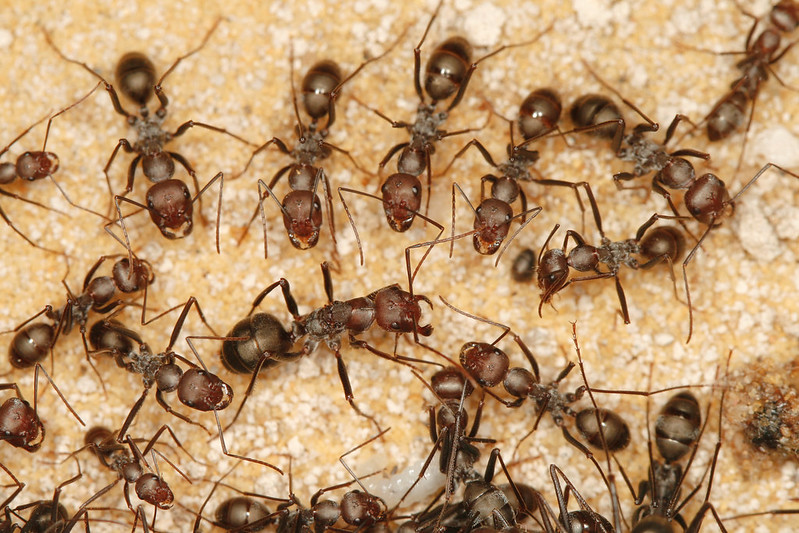
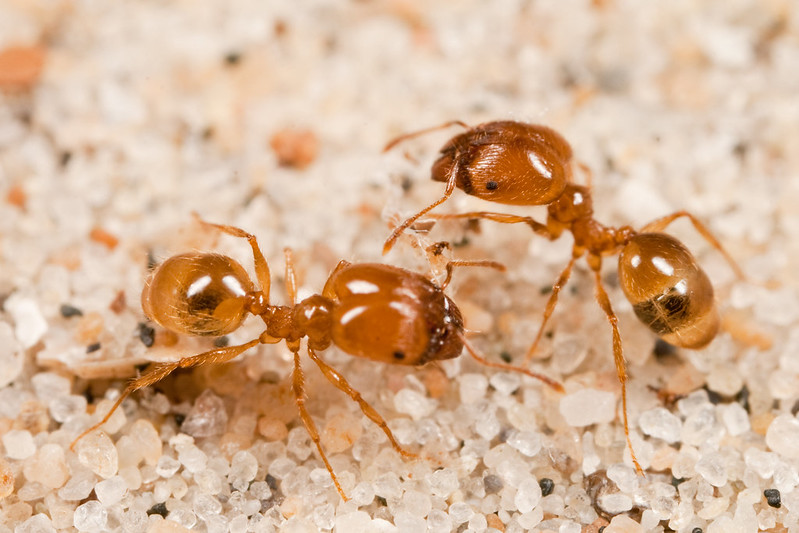
Social insects are powerful models for studying how one species can produce very different kinds of individuals. In ants, queens, workers, and males differ dramatically in morphology, lifespan, behaviour, and reproductive function. Fertilized eggs develop into females, which can become either long-lived reproductive queens, sometimes living up to 20 years, or short-lived non-reproductive workers. Unfertilized eggs develop into males. We use comparative genomics and functional experiments to understand how these developmental fates are controlled at the molecular level.
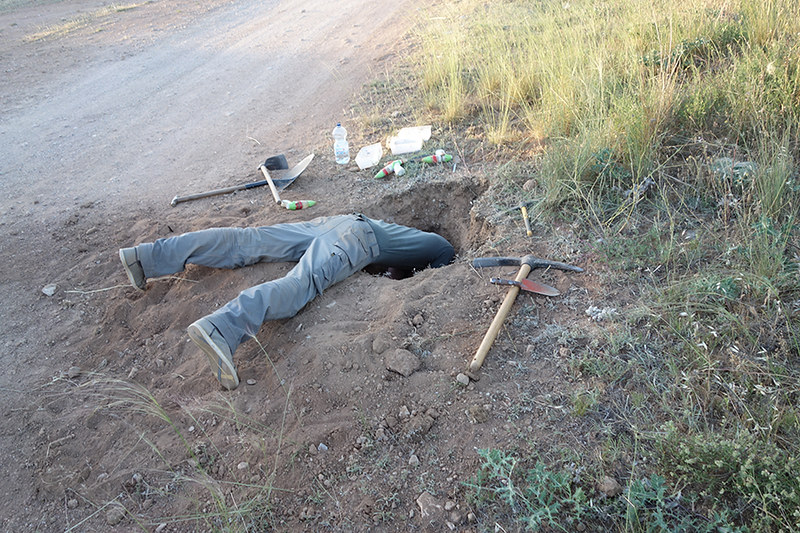
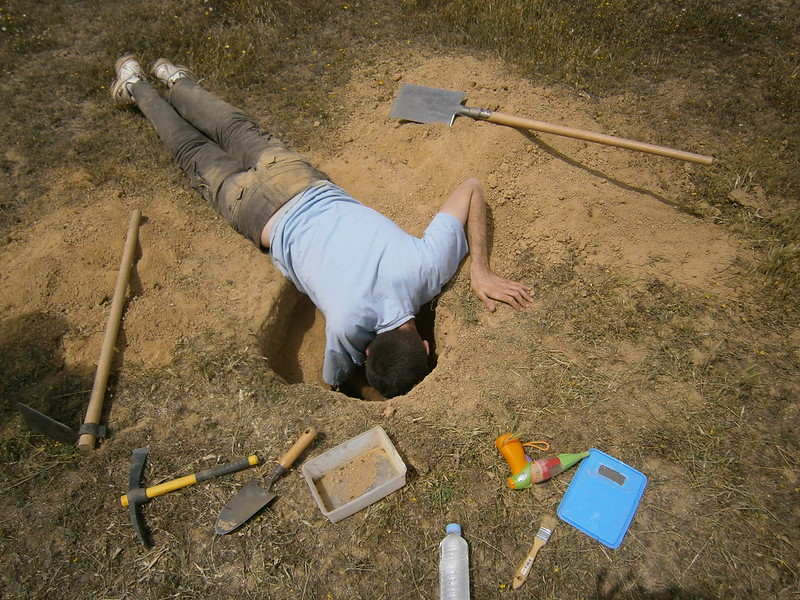
By studying ants in the field and in the laboratory, our lab has discovered several unusual reproductive systems. In most social insects, such as the honey bee, queen and worker development is influenced by the environment. In some ant species, however, we discovered that this developmental choice has become genetically determined. We have also discovered species that combine sexual and asexual reproduction in ways that are rare or unique in animals. These systems provide natural experiments for understanding how new reproductive systems evolve.
Our lab is based at the Centre for Evolutionary and Organismal Biology at Zhejiang University. We collaborate extensively with the Pan Lab (Insect sex determination and development) at the Max Planck Institute for Biology, Tübingen, through shared resources and projects.